


Blog Post
Year-End Carpet, Sofa and Upholstery Cleaning: Stains, Odours and Drying Time
Nov
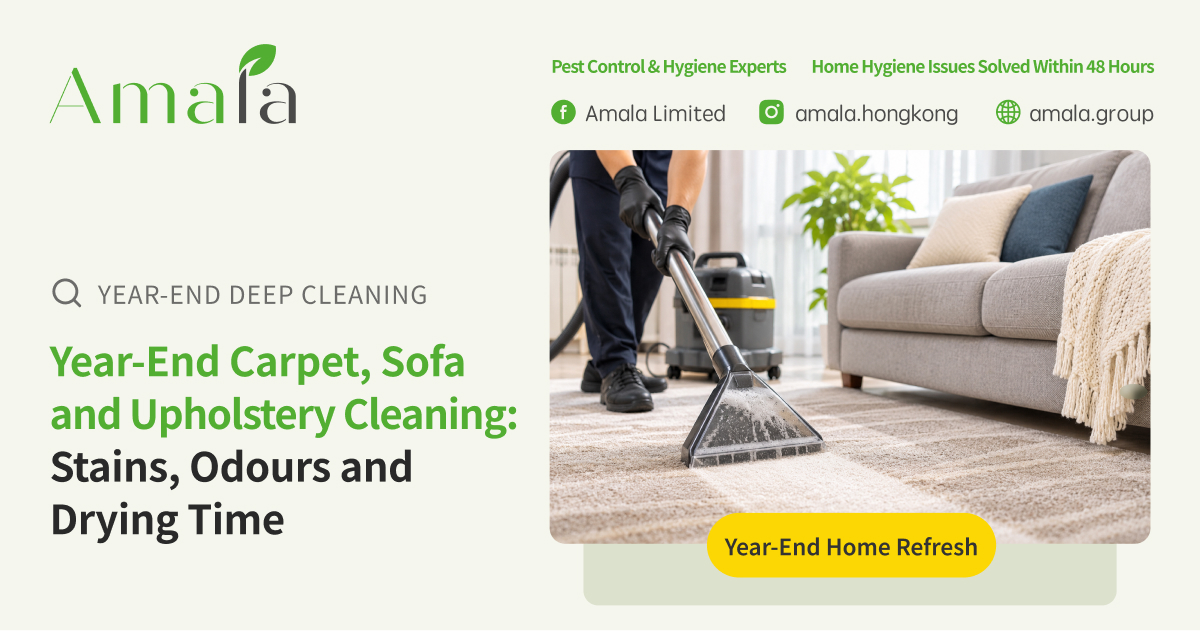
Before a year-end gathering, drink marks, pet hair and lingering smells on carpets or sofas become much more noticeable. The first step is to identify the material and the source of the problem. A method suitable for one fabric may fade or damage another, and a clean-looking surface does not always mean the underlying material is dry.
Identify the problem before choosing a product
Record when a spill happened, what caused it and any product already used. Rubbing an unknown stain or repeatedly adding cleaner may spread it or leave a residue. Pet hair and loose debris can often be removed with suitable tools, while urine marks or persistent odours may need further assessment.
A musty smell may come from the carpet backing, the nearby wall or poor ventilation rather than the visible fabric. Cleaning can reduce accumulated dirt, but one treatment should not be presented as a permanent removal of all allergens or dust mites.
Different furnishings need different plans
For a carpet, note the area, fibre, backing, fixed or loose installation and high-traffic patches. The team can then assess the stain and discuss an appropriate method under Amala’s carpet cleaning service.
For a sofa, photograph the seat, arms and cushion seams, and check whether the cover is removable. Leather and imitation leather should not automatically receive the same treatment as woven upholstery. Curtain cleaning also depends on its care label and whether removal and rehanging are included. Mattress cleaning, if needed, must be confirmed separately; it should not be assumed part of a whole-home clean.
Four checks before work begins
- Photograph the care label and any weak seams, fading or existing damage.
- Show the team both a full view and a close-up of each stain.
- Disclose previous cleaning attempts and any resulting water marks.
- Give the latest time the room must be used again, together with the available ventilation.
Drying depends on the material, method, humidity and airflow. Do not cover, walk on or sit on treated fabric until it is ready for use. If guests are coming the next day, discuss the schedule before work starts.
When should you stop trying stronger cleaners?
Avoid repeated chemical experiments on an unknown fibre, valuable furnishing, large old stain or already faded area. Do not mix cleaning products or apply heat and large amounts of water without checking the material. A permanent dye change or worn fabric may not be restored by cleaning.
If the surrounding wall is damp or mould marks keep returning, investigate that source before treating the upholstery. A useful starting point is the 25-point home cleaning checklist.
Coordinate with whole-home cleaning
Clear the area first, then agree on the order of room cleaning and fabric treatment. Confirm which individual items are included, whether there is a separate charge, who moves furniture and when the area can be used again. Refer to the deep cleaning quotation guide to prepare your enquiry.
Will every stain disappear?
No. Its source, age, fibre and past treatment affect the result. Some colour changes are permanent material damage.
Can a sofa be used immediately after cleaning?
Use it only when the agreed method and actual drying conditions allow.
Will carpet cleaning solve every musty smell?
Not necessarily. The source could be under the carpet, in a wall, the air conditioner or another damp location.
Ask Amala to assess the fabric
Send material labels, stain photos, approximate area and your preferred date through Amala’s contact page. The scope, method and price depend on the material and site conditions.
Get Quote


