


Blog Post
Year-End Restaurant Cleaning: Grease, Floors, Drains and Pest Risks
Nov
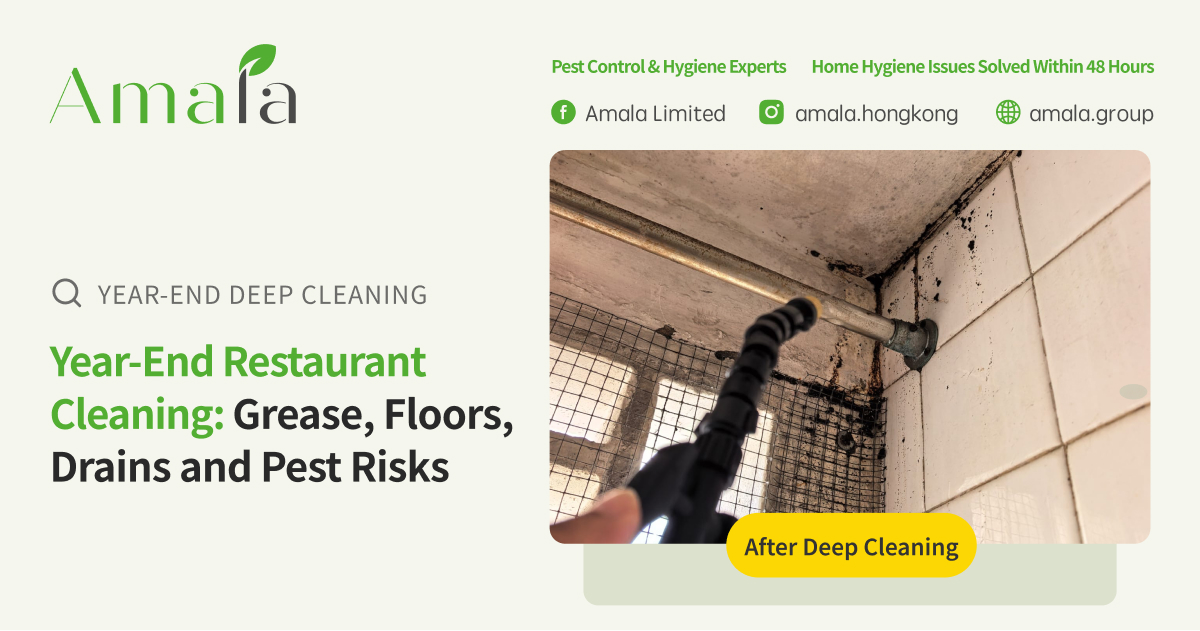
For a restaurant, café or food shop, year-end cleaning is more than making the dining area presentable. Grease around kitchen equipment, wet floor edges, drains and refuse storage can affect daily operations and attract pests. A planned clean should cover the back of house, fit around food handling and leave clear records for follow-up.
Hong Kong’s Food and Environmental Hygiene Department Food Hygiene Code addresses cleaning, maintenance, waste and pest control together. The checklist below supports site planning; operators must still follow applicable licensing, food-safety and equipment requirements.
Survey the customer area and kitchen separately
In the front of house, check the entrance, dining area, cashier, display units and customer washrooms. Protect food and stock, and inspect furniture bases and skirting boards as well as visible surfaces.
In the kitchen, map preparation, cooking, washing, storage and waste routes. Do not apply a generic office-cleaning method to hot equipment or food-contact surfaces. Work involving dismantling, internal machinery or ventilation ductwork requires the right expertise and specific agreement.
Five areas to put on the year-end list
Cookers and surrounding surfaces: Record grease around the hob and accessible external panels. Allow equipment to shut down and cool. Cleaning the hood exterior is not the same as cleaning its fan or ductwork.
Refrigeration and storage: Plan how food will be protected and kept at the correct temperature. Agree whether door seals, shelves, cabinet bases and the rear of heavy equipment can safely be reached.
Floors, wall edges and cabinet bases: Check for grease, food debris, pooled water and damaged joints. Cracks and persistent leaks need maintenance as well as cleaning.
Drains and strainers: Note visible debris, odour and poor drainage. A blocked or backflowing pipe may need plumbing work.
Refuse storage and entrances: Check containers, food waste, cleaning responsibilities and possible pest entry points near doors and stock rooms.
Link cleanliness to pest prevention
Food residue and waste supply food; pooled water and leaks supply moisture. Treating visible insects without investigating these conditions may allow the issue to recur. A deep clean alone is also not a substitute for a pest survey where one is needed.
Record pest sightings and locations, and do not apply insecticides casually near food or utensils. Ask about Amala’s pest control service if activity or entry points require assessment. The Food Hygiene Code also recommends keeping records of inspections, maintenance and pest-control work.
Coordinate cleaning, sanitising and pest work
The operator should first remove or protect food, utensils, packaging and personal items, then confirm equipment shutdown, access and reopening time. Removing soil is an essential part of hygiene, but the exact sequence of cleaning, sanitising and pest treatment depends on the site, products and contractor instructions.
Food-contact surfaces must be handled under the establishment’s appropriate hygiene procedures and product directions. An occasional sanitising visit does not replace everyday cleaning. After-hours or rest-day work still requires checks on building access, water, electricity, ventilation and safe routes.
For a zoning template, see the office and shop cleaning plan, then adapt it to the kitchen’s food-safety needs.
Manager’s handover checklist
- Mark dining, kitchen, storage and refuse areas on a plan.
- Assign responsibility for protecting and returning food, utensils and stock.
- Identify equipment that cannot be dismantled by the cleaning team.
- State business hours, shutdown periods and the latest reopening time.
- List cleaning, sanitising, pest control and repairs separately.
- Agree inspection criteria and who may approve extra work.
- Record recurring problem areas for daily checks during the busy season.
Does a year-end deep clean replace daily hygiene work?
No. Everyday cleaning and food-safety procedures must continue.
Does kitchen grease cleaning include extraction ducts?
Not unless the scope expressly includes that specialist work.
Is pest control enough if cockroaches are seen?
The team should also investigate food residue, moisture, entry points and storage practices.
Request an Amala assessment
Send operating hours, kitchen area, approximate size, photos and any pest history through Amala’s contact page. The scope, timing and quotation should reflect the actual food premises.
Get Quote


