


Blog Post
Musty Smell, Dark Spots or Air-Conditioner Odour During Year-End Cleaning?
Nov
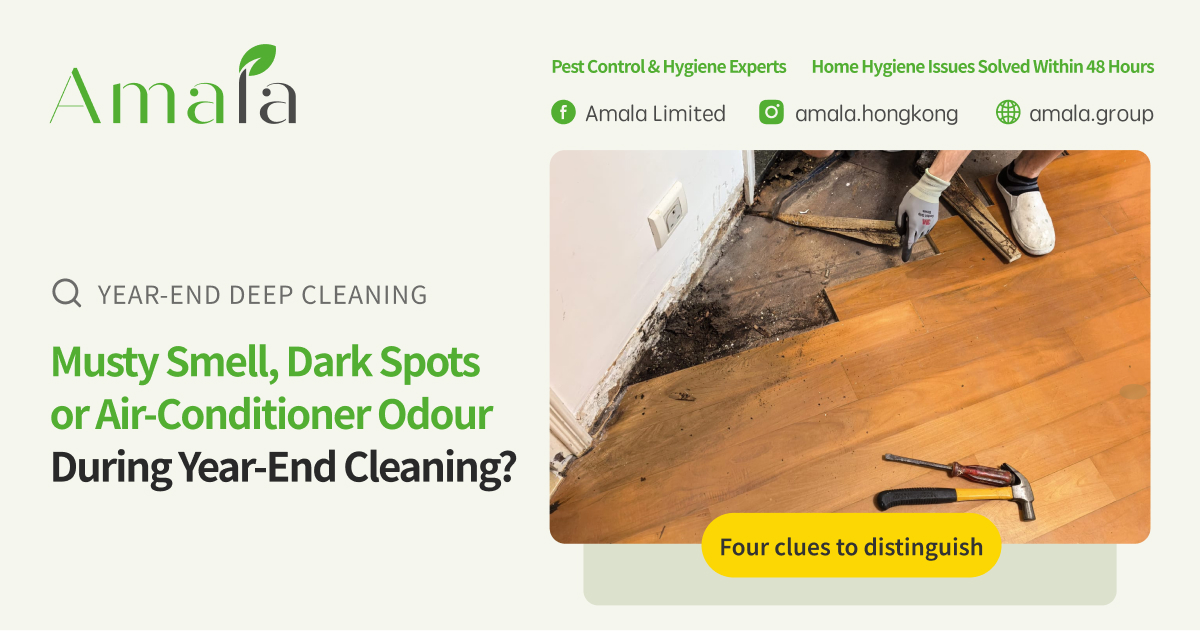
Moving a wardrobe or opening a little-used room can reveal dark marks and a musty smell. Wiping the visible spot or masking the smell does not establish what caused it. Moisture, leaks, drainage, dust and ageing materials need different responses. Start by recording the clues before deciding whether you need mould removal, air-conditioner cleaning or building repair.
Four clues to distinguish
A smell without visible spots: Note which room smells, whether it follows rain or air-conditioner use, and whether opening a cupboard makes it stronger. Check accessible window sills, the space beneath a bed and nearby furnishings. A smell alone cannot identify a particular mould species or the extent of a hidden problem.
Dark marks on a wall or cabinet: Photograph the overall area and a close-up. Record whether the mark is spreading, whether the surface feels damp and whether paint is bubbling or board is swelling. Not every dark mark is mould; water damage or material wear may require repair.
Blackened bathroom silicone: Surface grime and deteriorating sealant are different issues. If the mark is embedded and the seal has aged, replacing the sealant may be more appropriate than further scrubbing.
Odour when the air conditioner starts: Note whether it appears only at start-up, while running or even after shutdown. Check only user-accessible parts according to the manufacturer’s instructions. For internal cleaning or a drainage problem, ask about Amala’s air-conditioner service.
Survey the likely locations safely
Look at wardrobe backs and bases, reachable space beneath the bed, windows, bathroom extraction and the area around the air conditioner. Record dates, weather and any water marks. Do not move a heavy wardrobe alone, climb to inspect high fittings or open electrical equipment.
These observations make a better enquiry than simply saying “the room smells bad”. They also help separate a cleaning problem from a possible plumbing, waterproofing or ventilation problem.
Why do marks sometimes return?
Surface cleaning can remove reachable dirt, but moisture may continue entering through a leak or collecting because of condensation. If a window has water on it every morning, address the water and ventilation. If a wall becomes damp after rain, arrange the appropriate building assessment. Cleaning cannot replace waterproofing or pipe repair.
An Amala mould removal assessment can establish a suitable treatment scope. The chance of recurrence still depends on whether the underlying moisture problem is addressed.
DIY treatment or professional assessment?
For a small, safely accessible surface, follow the material and product instructions and provide ventilation. Never mix bleach with other cleaners. Repeatedly applying strong products to an unknown surface may damage it without resolving the cause.
Seek an appropriate assessment when marks spread, odours persist, access is difficult or a leak is suspected. Air-conditioner cleaning, mould removal and whole-home cleaning are distinct services. List each problem separately so the team can advise on the order of work. The home cleaning checklist and quotation questions can help you prepare.
Does no visible mould mean there is no problem?
Not necessarily. Review the smell and moisture clues, and seek further assessment where needed.
Does every air-conditioner odour call for mould removal?
No. Dust, drainage, equipment and the surrounding room are possible factors.
Can cleaning permanently prevent recurrence?
No universal guarantee is possible if the moisture or ventilation problem remains.
Send the clues to Amala
Use Amala’s contact page to provide the room, overview and close-up photos, when the smell appears, any water history and methods already tried. The team can discuss the relevant cleaning assessment and scope.
Get Quote


