

Blog Post
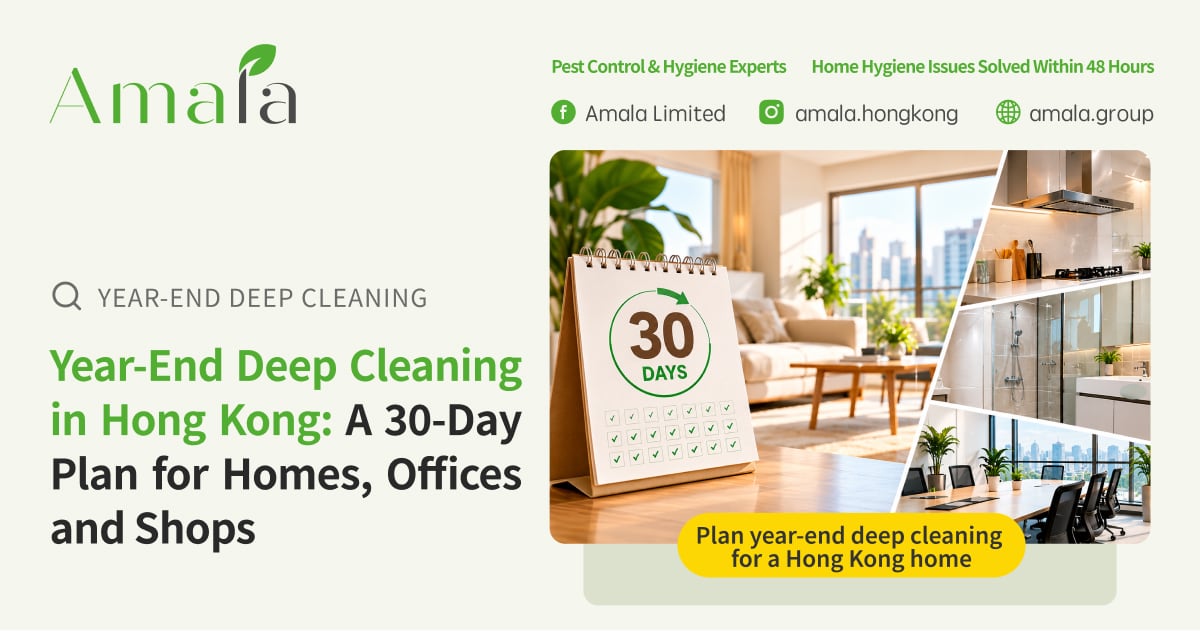
Year-End Deep Cleaning in Hong Kong: A 30-Day Plan for Homes, Offices and Shops
Nov
Year-end cleaning works best when you start with a clear scope, not a last-minute rush. A floor can look clean while grease remains above kitchen cabinets, dust collects in window tracks, or stains settle into a carpet. This 30-day plan helps you identify those jobs, choose suitable services and leave time for drying and inspection before guests or staff return.
The 30 days are a planning framework, not a claim that cleaning takes a month or that every service must be booked a month ahead. Adjust the stages to your property, the contractor’s availability and the date you need the space back.
Routine cleaning or deep cleaning?
Routine cleaning keeps frequently used surfaces tidy: removing rubbish, wiping desks and cleaning floors. Deep cleaning defines harder-to-reach or accumulated dirt and the appropriate treatment for each surface. Window tracks, cabinet edges, bathroom scale and heavily used carpets often need more time or equipment.
“Deep cleaning” is not a universal package. Air-conditioner dismantling, upholstery treatment, mould removal, disinfection, pest control and post-renovation residue may be separate services. Review Amala’s deep cleaning service and ask for a written scope before comparing quotations.
Days 30–22: Survey the site and set a deadline
Work backwards from a family gathering, office reopening, shop promotion or handover. Walk through each area and photograph both the whole room and specific stains. Note surface materials, approximate dimensions and any restrictions.
Separate your list into three groups: items you can tidy yourself, items requiring a cleaning assessment, and defects that may need repair. A damp wall or leaking pipe cannot be fixed by surface cleaning alone. At home, start with the kitchen, bathroom and bedrooms. In an office, add meeting rooms, the pantry and storage; in a shop, include customer areas and the back of house.
This is a useful point to ask about availability. You do not need to finish decluttering before making an initial enquiry.
Days 21–15: Clear belongings and agree on boundaries
Put away documents, valuables, fragile items and personal effects. Decide who will empty cupboards, move furniture and return items afterwards. Confirm which surfaces are included, which require separate assessment and which will not be treated. Exterior windows, high areas, heavy furniture and equipment that must be dismantled deserve explicit attention.
Commercial premises should also confirm lift access, loading arrangements, parking, water and power, and any building-management rules. These details can change the proposed working hours.
Days 14–8: Carry out the main work
Coordinate cleaning teams so that several trades are not working in the same narrow space. If carpets or other fabrics will be wet-cleaned, leave enough drying time for the actual material, method and ventilation conditions. A fixed number of hours cannot be assumed for every site.
Choose specialist work because a specific problem requires it. A stained carpet may call for carpet cleaning; recurring mould may need a mould removal assessment. Neither is automatically part of every year-end clean. Where pest control is also planned, ask the teams to coordinate their order of work so that cleaning does not disturb treatments.
Days 7–2: Inspect, dry and reopen
Check the original list area by area. Look at agreed surfaces, remaining grease, rubbish and pooled water. Take comparable before-and-after photos. Permanent staining, scratches and ageing materials may not return to a new appearance through cleaning; record unresolved items instead of scrubbing harder.
Replace furniture only when the treated area is ready for use. In a workplace, tell staff which areas are still drying and keep access routes clear. On the final day, concentrate on routine touch-ups rather than another large wet-cleaning job.
Questions to ask before booking
Does a whole-home clean include air conditioners and mould removal?
Do not assume so. Confirm dismantling, specialist treatments, exclusions and any additional charges in writing.
Is disinfection always necessary at year-end?
No single treatment suits every space. Cleaning removes soil; disinfection serves a different purpose and should be assessed against the site’s use and needs.
Can photos be used for a quotation?
They help explain the problem. Amala can advise whether the information is enough for an initial estimate or whether an on-site assessment is needed.
Ask Amala about your year-end plan
Send your property type, district, approximate area, problem photos and preferred completion date through Amala’s contact page. Mention any rooms that must stay in use, pets or children at home, and access restrictions so the team can assess a suitable scope.
Get Quote